The Role of Costume Design in Theater
Costume design resides at the intersection of storytelling, history, and practical crafts. A well-executed costume aids the audience in identifying who that character is and how it fits into the world of the play. It supports the script instead of distracting from it by playing with themes of color, texture, and silhouette.
Costumes as Visual Storytelling
Every costume tells a story before a character speaks. A worn jacket can suggest hardship, while tailored clothing may signal authority or wealth. Designers use details like fabric wear, color fading, or ornamentation to reflect a character’s background and emotional journey.
This visual shorthand is especially important in theater, where audiences view characters from a distance. Clear, readable costume choices help ensure that meaning carries across the stage without relying on close-ups or dialogue.
Supporting Character Development
Costumes evolve alongside characters. Changes in clothing can mark shifts in power, identity, or emotional state. A character may begin a play in restrictive garments and end in simpler, freer clothing, reflecting inner change.
These transitions must feel intentional and grounded in the narrative. When done well, costume progression becomes a subtle but powerful layer of character development.
Practical Demands of the Stage
Theater costumes must withstand repeated performances, quick changes, and intense physical movement. Unlike film, where a costume may only be worn briefly, stage garments are used night after night.
Designers consider durability, breathability, and ease of maintenance. Reinforced seams, washable fabrics, and hidden fastenings are common solutions that keep costumes functional without sacrificing appearance.
Historical and Contemporary Theater Costumes
Theater costume design draws heavily from history, but it is never a simple act of reproduction. Designers interpret historical clothing through a modern lens, adjusting details to suit stage visibility, movement, and audience expectations. This balance between accuracy and adaptation defines much of theatrical costuming.
Contemporary theater expands these traditions by blending eras, styles, and materials. Modern productions often use costumes symbolically rather than literally, allowing clothing to express ideas rather than strict historical fact.
Interpreting Historical Periods

Historical costumes require research into silhouettes, fabrics, and construction methods of a specific era. However, full accuracy is rarely practical. Designers simplify shapes or substitute materials to make garments lighter and more wearable.
The goal is to capture the essence of a period while ensuring performers can move, breathe, and perform comfortably under stage conditions.
Modern and Experimental Approaches
In contemporary theater, costumes may mix time periods or avoid realism altogether. Designers might use modern clothing in classical plays to highlight timeless themes or create visual contrast.
Experimental productions often treat costumes as abstract elements, focusing on color, shape, or texture rather than recognizable fashion. This approach invites audiences to engage with ideas rather than historical detail.
Cultural Context and Sensitivity
Costumes also carry cultural meaning. Designers must approach cultural references with care, avoiding stereotypes and ensuring respectful representation.
Research, consultation, and collaboration help ensure that costumes reflect cultures accurately and thoughtfully, especially when portraying traditions outside the designer’s own experience.
The Costume Design Process
Creating theater costumes is a collaborative process that unfolds alongside rehearsals and technical planning. Designers work closely with directors, set designers, and performers to align visual choices with the overall vision of the production.
From initial sketches to final fittings, each stage requires both creativity and precision. Successful costume design is as much about communication as it is about artistry.
Script Analysis and Concept Development
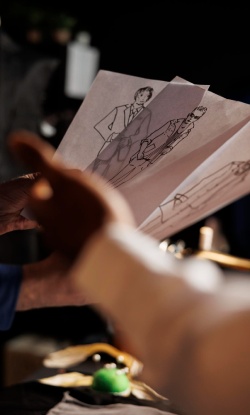
The process begins with reading the script carefully. Designers look for clues about time, place, character relationships, and thematic tone. Notes from the director help shape a shared visual concept.
Early sketches explore ideas before practical decisions are made. These drawings communicate mood and direction, serving as a foundation for later construction.
Fabric Selection and Construction
Choosing fabric is one of the most important decisions in costume design. Texture, weight, and movement all affect how a costume appears on stage. Under stage lighting, colors and materials behave differently than in natural light.
Construction methods vary depending on budget and timeline. Some costumes are built entirely from scratch, while others are adapted from existing garments to save time and resources.
Fittings and Adjustments
Fittings allow designers to refine shape and comfort. Actors provide feedback on mobility and wearability, which leads to adjustments before final approval.
These sessions are essential for ensuring that costumes support performance rather than hinder it. Even small changes can make a significant difference on stage.
Key Elements of Effective Theater Costumes
The strength of costume design lies in establishing a set of key principles that inform design decisions. These principles help ensure that the costumes contribute to the production rather than stand out for the wrong reasons.
- Clarity: characters and contexts should be clearly conveyed even at a distance.
- Consistency: Designs should follow the visual theme of the entire production.
- Functionality: Garment structures must support movement, quick changes, and repetition of a show.
- Longevity: Materials and construction must survive long runs.
- Relationships: Design strategies must advance the overall direction, lighting, and setting.
The Last Curtain: Why Theater Costumes Matter
Costume designs being the silent creators of the show convey, nurture and support audience perception. In fact, they offer actors something to work against and drive the creative decisions for every production. These garments, which have a blend of art, history, and practicality, are constructed at once and are felt only in the live performance. With an understanding of how costumes work, people of a more refined taste can begin to understand how much work and discipline verge on the seeming simplicity of the stage.